
2026 Toyota Tacoma Trims: What Changes Parts Fitment?
Verify fitment with the merchant before you buy.
Reviewed by DoesItFit Editorial · How we evaluate compatibility
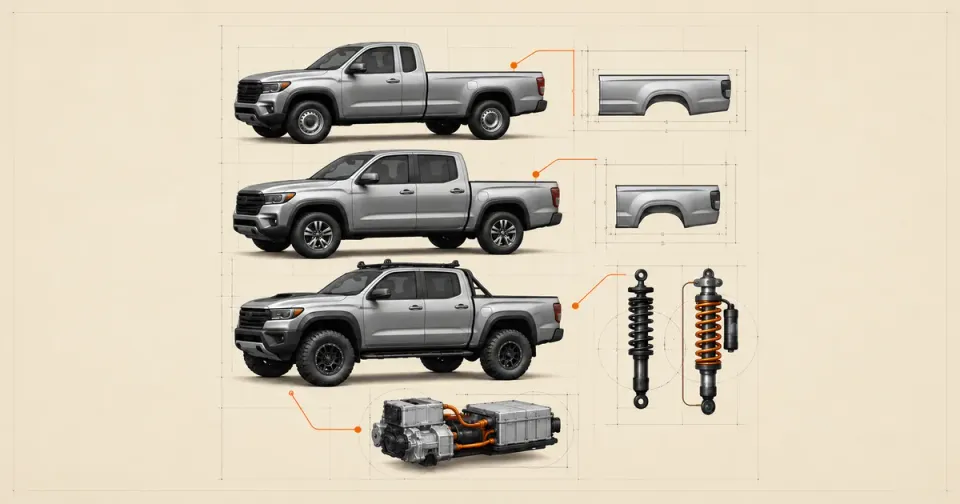
TRIM IS THE FIRST FILTER—NOT THE FINAL FITMENT ANSWER
The 2026 Tacoma has eight trims, but a trim badge does not identify a complete parts application. Before buying, match the exact grade, XtraCab or Double Cab, 5- or 6-foot bed, i-FORCE or i-FORCE MAX powertrain, drivetrain, suspension and relevant factory equipment to the exact manufacturer SKU.
What are the eight 2026 Tacoma trims?
Toyota lists SR, SR5, TRD PreRunner, TRD Sport, TRD Off-Road, Limited, TRD Pro and Trailhunter for the 2026 U.S. lineup. Those names describe equipment families. They do not mean every truck within a family shares the same body, powertrain or mounting interfaces.
Use this table as a fitment starting point, not as an application chart for a specific part.
| 2026 grade | Configuration facts worth recording | Parts categories that deserve an extra check |
|---|---|---|
| SR | XtraCab is available; Toyota made the tow hitch standard on SR XtraCab for 2026 | Hitch/rear accessories, cab steps, roof parts, bed products, suspension |
| SR5 | XtraCab is available in addition to the broader cab/bed choices in the lineup | Cab/bed products, steps, racks, suspension and drivetrain-dependent parts |
| TRD PreRunner | XtraCab is one of Toyota's named applications; black front logo is a 2026 update | Cab/bed length, 2WD/off-road equipment, front trim and suspension |
| TRD Sport | i-FORCE MAX is available; exact cab, bed and powertrain still matter | Skids, exhaust, suspension, steps, bed products and electronics |
| TRD Off-Road | i-FORCE MAX is available; SDM is available; wheel/tire packages vary | Suspension, skids, bumpers, wheels/tires, cameras and recovery hardware |
| Limited | i-FORCE MAX is available; Toyota lists full-time 4WD and standard AVS for Limited | Suspension, drivetrain, underbody parts, electronics, cameras and trim |
| Trailhunter | i-FORCE MAX is standard; 5- and 6-foot beds are offered; specialty suspension, recovery and protection are included | Bed products, armor, bumpers, suspension, exhaust and existing accessory conflicts |
| TRD Pro | i-FORCE MAX is standard; specialty front seats, FOX suspension and distinct exterior/recovery equipment are included | Suspension, interior parts, bumpers, armor, lighting and existing equipment conflicts |
Review Toyota's 2026 model-year announcement. Toyota's lineup facts establish which variables exist; they do not approve an aftermarket part.
Which details matter more than the trim badge?
Cab and bed
Toyota offers the 2026 Tacoma in XtraCab and Double Cab body styles with nominal 5- and 6-foot beds across the lineup. Toyota specifically names XtraCab availability on SR, SR5 and TRD PreRunner. It also says Trailhunter is available with either bed length.
Cab and bed affect more than tonneau covers. They can change wheelbase, roof length, step/slider span, bed-rail geometry, rack position and exhaust or frame-side applications. Record both fields even when a product title mentions the correct trim.
Use the Tacoma cab and bed-length guide when the product attaches to the roof, cab, frame side or bed.
i-FORCE gas or i-FORCE MAX hybrid
Toyota makes i-FORCE MAX available on TRD Sport, TRD Off-Road and Limited, and standard on TRD Pro and Trailhunter. That means “TRD Off-Road” or “Limited” alone may not resolve the powertrain.
Hybrid hardware can change underbody packaging, cooling, exhaust routing, electrical systems and the application for skids or other powertrain-adjacent products. Do not infer the powertrain from wheels, color or decals. Confirm it from Toyota's VIN-specific vehicle record and the truck itself, then use the i-FORCE versus i-FORCE MAX fitment guide for powertrain-sensitive parts.
Drivetrain and suspension
Toyota lists 2WD, part-time 4WD and full-time 4WD choices in the 2026 lineup. Limited uses full-time 4WD with an electronic locking center differential, while other applications differ. Toyota also identifies Adaptive Variable Suspension (AVS) as standard on Limited and the Stabilizer Disconnect Mechanism (SDM) as standard on Trailhunter and TRD Pro and available on TRD Off-Road.
These systems matter when a product mounts near suspension, driveline or underbody hardware. A suspension kit documented for a conventional configuration is not automatically approved for AVS or SDM. A skid plate documented for one drivetrain or powertrain is not automatically a fit for another.
Cameras, sensors, armor and recovery equipment
Factory equipment can occupy the same space or electrical path as an aftermarket part. Inspect the truck for:
- front, surround-view or trail cameras;
- radar and parking sensors;
- factory skids and recovery points;
- tow hitch and trailer wiring;
- bed rails, power outlets and covers;
- specialty bumpers, intake or exhaust pieces; and
- package-specific wheels and tires.
Toyota says Multi-Terrain Monitor is available to drivers of TRD Off-Road, TRD Pro and Trailhunter through the available 14-inch screen. That is not proof that every truck in those grades has identical camera hardware. Use the VIN/build record and physical inspection.
Can two trucks with the same trim need different parts?
Yes. A TRD Off-Road can differ by gas versus hybrid powertrain, cab, bed, SDM and package equipment. A Limited can differ by powertrain and body configuration even though AVS is standard. Trailhunter's 5- and 6-foot bed choices create separate applications for covers, racks, mats and shells.
Build one complete vehicle line before searching. For example:
> 2026 Tacoma TRD Off-Road Double Cab, 5-foot bed, i-FORCE MAX, part-time 4WD, SDM equipped, factory front camera and factory skids.
Then compare that line with the exact manufacturer's application and installation instructions. If the maker omits a relevant field, ask for written confirmation rather than assuming that the trim name covers it.
How should you verify your 2026 configuration?
- Enter the 17-character VIN in Toyota's Vehicle Specification tool.
- Record grade, cab, bed, powertrain, transmission, drivetrain, suspension and listed factory/port equipment.
- Inspect the truck for removed, replaced or added parts at the intended mounting area.
- Record the exact product SKU, not just its family name.
- Require the part maker's application to include every field that affects that component.
The VIN record describes how the vehicle was built. The physical inspection describes what is installed now. Neither one by itself proves aftermarket fitment. The exact-configuration workflow explains how to combine them.
Compatibility snapshot
| Product/application description | 2026 Tacoma information available | Result | Required check |
|---|---|---|---|
| Exact SKU documents the grade, cab/bed, powertrain and relevant equipment | Matching verified truck | Candidate fitment | Follow exclusions and installation instructions |
| Listing says only “2026 Tacoma” or only names the trim | Any 2026 configuration | Insufficient | Resolve all component-relevant fields |
| Gas-only underbody part | i-FORCE MAX truck | Do not assume fitment | Require a hybrid application for the exact SKU |
| Bed product for one nominal length | Truck with the other bed length | Wrong application | Match the exact bed and rail configuration |
| Part documentation does not address AVS, SDM, cameras or sensors it may affect | Equipped truck | Unknown until confirmed | Get written manufacturer guidance |
Bottom line
The 2026 trim name is useful, but it is only the first line of the fitment record. Identify the exact cab, bed, powertrain, drivetrain, suspension and factory equipment, then match those facts to one manufacturer SKU. When a listing collapses all eight trims into “2026 Tacoma,” treat it as incomplete until the maker resolves the relevant configuration differences.
Sources & notes
- Toyota: The 2026 Toyota Tacoma—Adventure Awaits, accessed 2026-10-15. Primary source for the eight grades, cab/bed families, i-FORCE MAX availability, drivetrain, AVS, SDM and selected 2026 equipment updates. It does not establish individual-VIN equipment or aftermarket fitment.
- Toyota 2026 Tacoma features and specifications, accessed 2026-10-15. Current Toyota grade/configuration reference; availability can vary by configuration and package.
- Toyota Vehicle Specification tool, accessed 2026-10-15. VIN-specific starting point for factory configuration and listed equipment; verify the truck's current physical state.