
Steel vs Alloy Winter Wheels for Ford Maverick
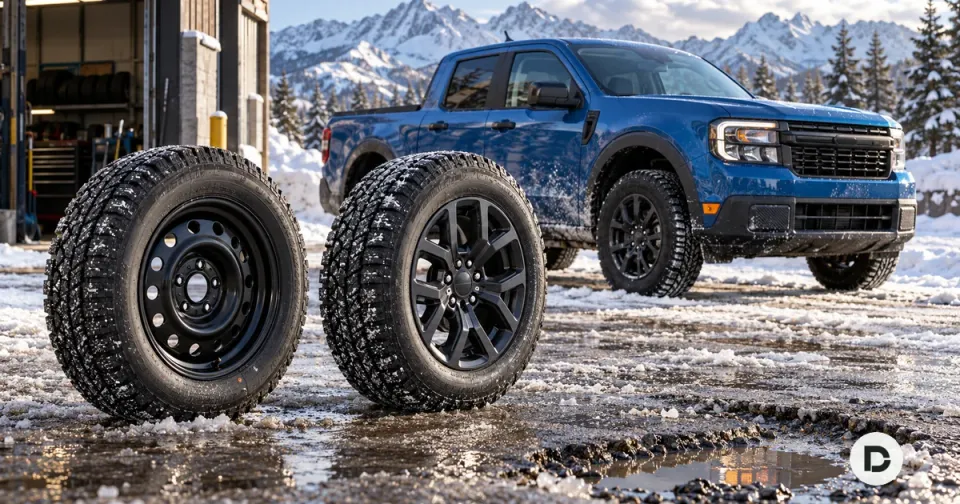
FIT AND FINISH QUALITY MATTER MORE THAN MATERIAL ALONE
Steel wheels can be economical and visually forgiving for winter use; alloys can be lighter and offer more brake-clearance shapes and corrosion-resistant finishes. Either is suitable only with the correct diameter, width, bolt pattern, center bore, offset, load rating, lug seat, brake clearance and compatible TPMS sensors.
Steel is not automatically stronger, and alloy is not automatically fragile. Design, manufacturing quality, wheel load rating and impact determine performance more than the broad material label.
Compatibility snapshot
| Priority | Steel | Alloy |
|---|---|---|
| Purchase price | Often lower | Usually higher |
| Weight | Often heavier | Can be lighter, varies by design |
| Appearance after winter | Simple repaint possible | Finish quality and care matter |
| Brake clearance | Shape can be limiting | More spoke/barrel options |
| Impact outcome | May bend | May bend or crack depending on design |
For 2025–2026 trucks, confirm the correct TPMS frequency/application rather than moving an earlier sensor set by assumption. Use the lug nut seat required by the winter wheel; factory lugs that fit an OEM alloy may not seat an aftermarket steel wheel correctly.
Downsizing wheel diameter for more tire sidewall can help pothole protection, but only if the barrel clears the brakes and the approved tire maintains load, speed, diameter and chain-clearance requirements. Wash salt from both wheel faces and the hub area, and retorque after the initial service interval specified by the installer.
Bottom line
Choose steel for a proven low-cost fit and simple winter service; choose alloy for a lighter or better-clearance documented fit. The exact wheel application and hardware determine safety—not the material slogan.
Select the tire with the Maverick winter tire-size guide.
Sources & notes
- Michelin tire-size guide, accessed 2026-10-27. Replacement size and rating requirements.
- Tire Rack wheel center-bore guide, accessed 2026-10-27. Hub and wheel interface.
- 2025 Ford Maverick technical specifications, accessed 2026-10-27. Factory wheel/tire context.