
Should a Needle-Bearing Delete Accompany a 3-Inch Lift on a Tacoma?
Verify fitment with the merchant before you buy.
Reviewed by DoesItFit Editorial · How we evaluate compatibility
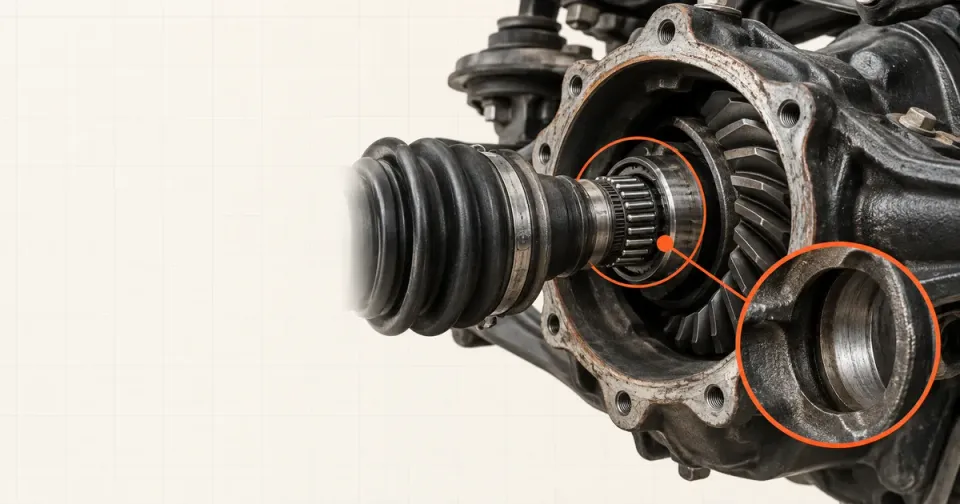
NOT AUTOMATICALLY REQUIRED
A needle-bearing delete can be a sensible targeted choice for a compatible 2005–2023 4WD Tacoma with a confirmed front-differential issue or planned differential work; a 3-inch lift alone does not prove it is required. Confirm the exact axle/differential application and diagnose the noise or vibration before buying parts.
Decision snapshot
| Truck/symptom state | Verdict | Required check |
|---|---|---|
| Compatible 2005–2023 4WD clamshell differential with a confirmed bearing-related issue | Targeted modification may be appropriate | Verify the exact differential, kit and diagnosis. |
| Three-inch lift with no confirmed differential symptom | Not automatically required | Diagnose before replacing the factory bearing. |
| 2WD, fourth-gen or unverified differential application | Not established | Do not transfer the product listing to another design. |
| Vibration could come from tires, CVs, hubs or alignment | Diagnosis remains open | Isolate the source before ordering parts. |
Start with the actual bearing and symptom
Toyota lists needle bearing #90364-35010 as a front axle-housing/differential component. Its T-SB-0026-15 bulletin describes a specific symptom on 2005–2015 part-time-4WD Tacomas: cyclical front-differential groaning or grinding in 2WD that goes away in 4WD. That is useful diagnostic context, but it does not make the bulletin a diagnosis for a 2016–2023 truck or every lifted Tacoma. See Toyota's bearing listing and the filed Toyota bulletin.
East Coast Gear Supply's 8-inch clamshell bushing replaces the factory driver-side needle bearing on its listed applications, including 2005–2023 Tacoma models. That makes the product an application-specific differential modification—not a general suspension component. Review ECGS's listed Tacoma application.
A 3-inch lift is not a diagnosis
A lift can change CV operating angles and make existing wear or vibration more noticeable, but it does not identify the source. Tire balance, wheel or hub bearings, CV joints, alignment, differential condition, and installation errors can create similar symptoms. Diagnose the truck before using a bearing delete as the presumed cure; replacing the wrong part does not establish a reliable front end.
When the modification is logical
The decision is most defensible when a compatible differential is already being opened for a confirmed bearing-related concern, or when a qualified installer has identified the factory bearing as the relevant issue. Use the exact kit for the differential and vehicle year, include the specified seal/components, and follow the manufacturer's installation requirements. Do not extrapolate one brand's application list to a different generation, 2WD truck, or front-differential design.
Bottom line
Do not add a needle-bearing delete merely because a Tacoma has a 3-inch lift. Confirm the drivetrain, symptom, and differential application first. If the differential is compatible and the bearing is genuinely the issue, a purpose-built bushing can be a valid repair-path decision; otherwise, diagnose before modifying. If the symptom began after changing wheels, verify Tacoma aftermarket-wheel offset and clearance as a separate fitment variable.
Sources & notes
- ECGS 8-inch clamshell bushing, accessed 2026-09-05. Documents the product's stated function and 2005–2023 Tacoma application; verify the exact differential before purchase.
- Toyota needle roller bearing #90364-35010, accessed 2026-09-05. Establishes the Toyota part's front axle/differential role; use Toyota fitment lookup for the individual vehicle.
- Toyota T-SB-0026-15 Rev2, accessed 2026-09-05. Toyota's filed bulletin defines the 2005–2015 part-time-4WD groan/grind symptom and repair path; it does not extend that diagnosis to later models.