
Should a Tacoma Carry Kayaks on a Mid Rack or a Full-Height Bed Rack?
Verify fitment with the merchant before you buy.
Reviewed by DoesItFit Editorial · How we evaluate compatibility
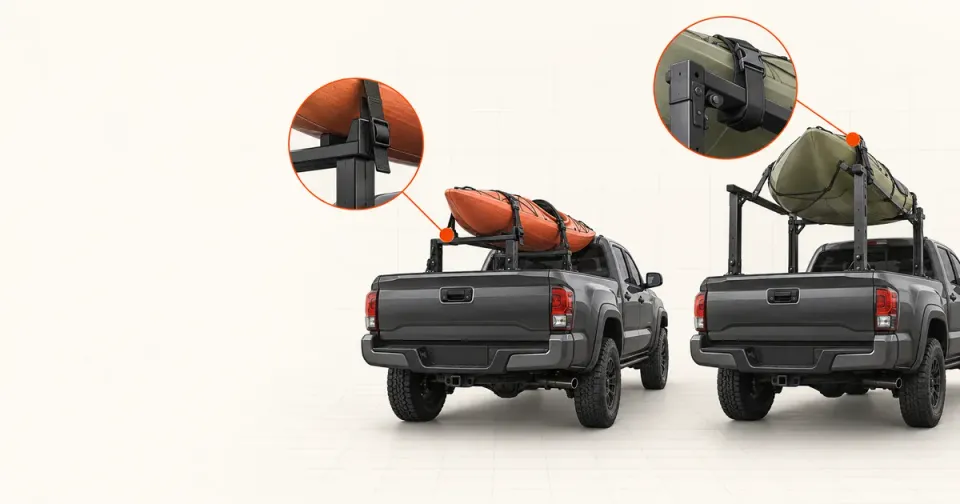
CHOOSE LOADING HEIGHT BEFORE BRAND
Choose a mid-height bed rack when easier kayak loading, lower profile, and bed access are the priority. Choose full height when long kayaks need cab-level support or the rack must share height with a roof rack. Either choice still requires the rack, bars, mounts, and straps to be documented for the exact load and Tacoma bed.
Rack-height decision snapshot
| Use case | Better starting height | Trade-off | Required check |
|---|---|---|---|
| Easier solo loading and lower profile | Mid height | May not align with cab-level front support for a long boat. | Verify kayak length, carrier spacing and bed clearance. |
| Long kayak needs cab-level or roof-rack support | Full height | Higher lift and greater overall clearance exposure. | Document both support points and the full load path. |
| Rack must coexist with a tonneau | Either, only as a documented system | Rack height does not solve mounting-interface conflicts. | Match the exact rack, cover and required adapter. |
Mid height is usually the easier kayak-loading choice
A mid-height rack keeps the kayak closer to the bed rail, reducing the lift required for loading and unloading. It also keeps the load lower than a cab-height system. That is often the practical choice for a single paddler who values day-to-day access and does not need to bridge the kayak to a roof rack.
Full height solves a different long-load problem
Full-height bars can align closer to the cab or roof-rack plane, giving a long kayak additional support and potentially a cleaner front-to-rear load path. The trade-off is the higher lift and more attention to garage, tree, wind, and clearance constraints. Full height is worthwhile when that alignment is genuinely needed—not simply because it looks more capable.
Use the complete rack rating and fitment system
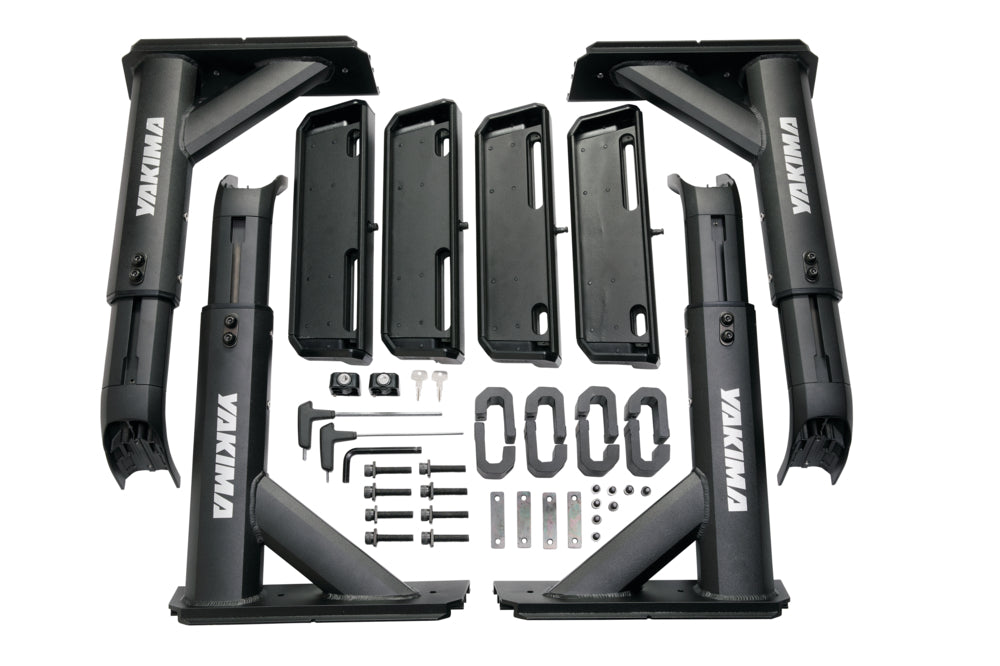
Yakima's OverHaul HD illustrates the variables to verify: it adjusts from 19 to 30 inches, lists a 500-lb on-road and 300-lb off-road rating, and requires specific kits for tracked beds and select tonneau covers. Those ratings and fitment rules belong to that system; they do not transfer to another rack, kayak mount, or tonneau combination. Review Yakima's OverHaul HD specifications.
The kayak carrier and tiedowns set their own limits
Rack height does not replace the carrier's installation rules. Yakima's JayLow carrier, for example, specifies a minimum 24-inch crossbar spread and includes bow and stern tiedowns. Thule's kayak mounting instructions independently require bow and stern tiedowns, warning that omitting them can result in loss of the kayak or rack. Use the carrier instructions for its load limit, crossbar spacing, and tiedown method; a truck-rack capacity alone is not approval for a kayak setup. Review Yakima's JayLow requirements and Thule's bow/stern tiedown instruction.
Bottom line
For most kayak-only Tacoma setups, start with the lowest rack that loads safely and clears the bed use you need. Move to full height when cab-level support for long boats or a shared roof-rack system justifies the added height. If the front support depends on a Toyota roof rack, verify that rack separately; the 2025 SR5 OEM roof-rack guide shows why cab and VIN matter.
Sources & notes
- Yakima OverHaul HD, accessed 2026-09-05. Documents adjustable height, stated load ratings, and the need for application-specific track and tonneau kits.
- Yakima JayLow kayak carrier, accessed 2026-09-05. Documents a carrier-specific minimum crossbar spread and tiedown equipment; verify the version and carrier instructions before use.
- Thule kayak mounting instructions, accessed 2026-09-05. Independently requires bow and stern tiedowns; it does not establish a Tacoma rack's load rating or fitment.