
Tacoma Lightweight Rooftop Tents: What Do You Give Up?
CHOOSE THE TENT YOU CAN SLEEP IN AND LIVE WITH
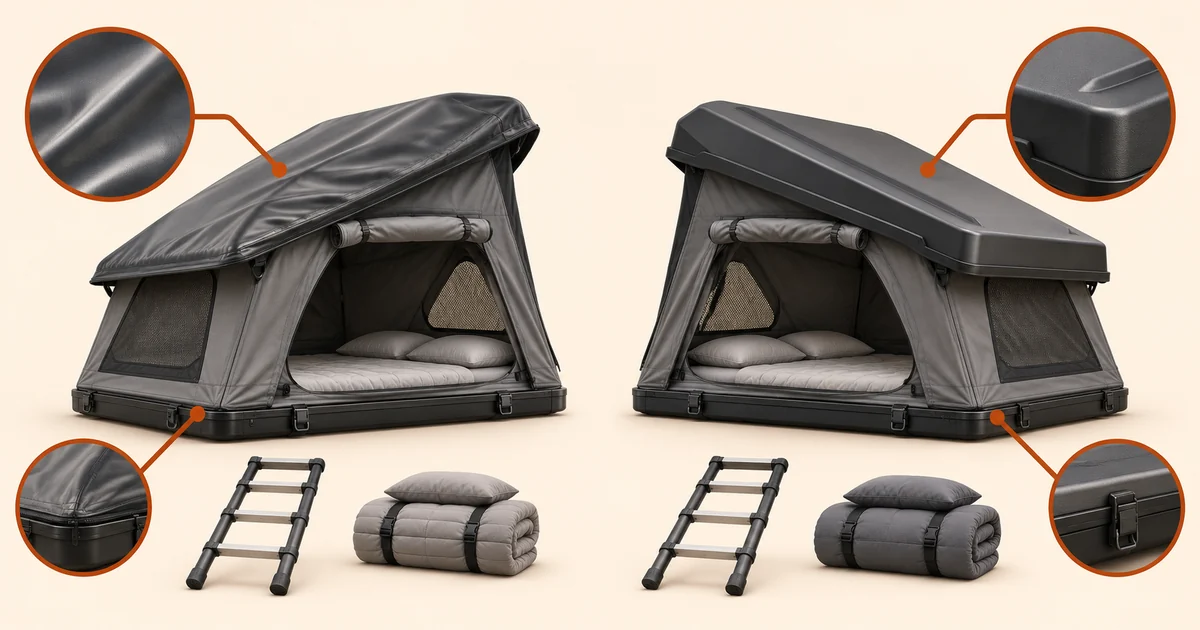
A lightweight rooftop tent can suit a Tacoma, but compare sleeping space, lid design and the complete carried package before choosing by pounds. Inspired Overland’s current Standard and Carbonlite differ by only four advertised pounds yet have different interiors, shells and prices. Neither tent’s own capacity establishes the truck or rack’s moving and occupied-load limits. Confirm the exact tent revision and mounting system.
Fit Assistant · For your setup
Apply this to your tent choice
Tell us a little about your situation. Fit Assistant will help you apply this guide.
What changes between these lightweight designs?
This is a focused comparison of two current Inspired Overland listings, not a ranking of every lightweight tent. It also avoids applying an older review’s specifications to a newer order.
| Listed feature | Standard | Carbonlite |
|---|---|---|
| Advertised weight | 76 lb | 80 lb |
| Interior length × width | 78 × 48 in | 85 × 49 in |
| Exterior length × width | 82 × 50 in | 86 × 49⅝ in |
| Closed height, including mounting crossbar | 6 in | 5.25 in |
| Lid/shell | Tonneau-grade vinyl | Carbon fiber and aluminum |
| Included mattress | 1.5-in foam with condensation pad | Hybrid foam/air; pump excluded |
| Displayed price, 7 Nov 2026 | $1,499 | $2,699 |
Sources: manufacturer Standard and Carbonlite pages. Prices exclude a complete installed quote. Ask what each stated weight includes before comparing loaded systems.
The meaningful difference may be the extra seven inches of listed sleeping length, not the four pounds. A taller sleeper should try the actual usable mattress area. An interior dimension is not a promise that two particular adults will sleep comfortably.
What are you giving up to save weight?
Start with the features you use. Do you want a rigid upper shell, room to store your normal bedding while closed, or a mattress that needs inflation? Ask the supplier to demonstrate closing the selected tent with your intended bedding. Do not assume a thin packed profile leaves room for every pillow and sleeping bag.
The Standard’s flexible lid and foam mattress offer a different ownership routine from the Carbonlite’s rigid shell and hybrid air mattress. Neither description alone proves better insulation, quieter rain performance or longer service life. Those questions need current product evidence or an in-person trial.
The price difference shown here is $1,200 before shipping, mounts or other additions. Spend that difference only if the added space or features solve a problem you actually have.
Count the whole load, not just the tent
Build one consistent inventory for each option:
| Item | What to record |
|---|---|
| Tent | Exact model/revision and weight-inclusion statement |
| Rack or crossbars | Actual installed weight and applicable limits |
| Mounts | Brackets, adapters and any additional hardware |
| Gear carried while driving | Bedding, ladder location and accessories |
| Parked use | Occupants and equipment under the relevant instructions |
Illustrative arithmetic: a 76-lb tent plus 30 lb of rack/mounts and 14 lb of additional carried gear totals 120 lb. With an 80-lb tent and the same assumed additions, it is 124 lb. These are invented inventory values for comparison, not measured weights or an approved Tacoma load.
Check moving and parked limits separately. A tent’s 500-lb capacity is not a roof, bed-rack, topper or vehicle allowance. The Tacoma roof-load guide explains that distinction.
Will removing it between trips be practical?
Low weight helps the handling question, but an awkward wide object still needs a planned removal and storage method. Check where you will stand, whether mounts are reachable, where the detached tent will rest and how it will be secured.
Do not infer that one person can lift it safely from a low advertised weight or another owner’s story. Ask for a suitable handling arrangement for the actual tent and mounting height. If removal is difficult, a supposedly convenient purchase may stay installed when you did not intend it to.
Check the footprint and daily access
Confirm crossbar spacing, attachment requirements, cab/bed movement, opening direction and ladder access with the selected system. A tent that is light enough can still obstruct cargo access or extend into space you need.
Use the roof-versus-bed-rack decision for the mounting-location question. This page helps choose the tent after keeping those limits in view.
Two useful buying decisions
Two adults, frequent removal: compare the real sleep trial and handling plan first. Four pounds may matter less than comfort and access to the mounts.
Occasional solo camping on a budget: the simpler Standard may be enough if its space and routine work. The more expensive shell is optional value, not an automatic requirement.
Compatibility snapshot
| Choice | Result | Required check |
|---|---|---|
| Current Standard or Carbonlite | Documented lightweight candidates | Exact revision, contents and usable space · Standard · Carbonlite |
| Older 87-lb review used for current Standard | Not a current specification match | Use the selected current listing · Standard · Carbonlite |
| Tent capacity used as rack approval | Unsupported | Full system moving/parked limits · Standard · Carbonlite · Thule rooftop-tent fit instructions |
| Tent plus current Tacoma rack | Unknown until confirmed | Mounting, spacing, loads and opening access · Standard · Carbonlite · iKamper Tacoma roof and rack application guide |
Before you buy
Finish with a tent you can sleep in, mount, handle and afford as a complete system. Fit Assistant can help weigh those trade-offs using the details you know.
Sources & notes
Reviewed 7 November 2026. Current Standard and Carbonlite manufacturer listings supply the named comparison. No original weather, comfort or load test is claimed. Confirm the actual order and mounting instructions. See our methodology.