
Should a Tacoma Use OME EL111R or EL112R Rear Leaf Springs?
Verify fitment with the merchant before you buy.
Reviewed by DoesItFit Editorial · How we evaluate compatibility
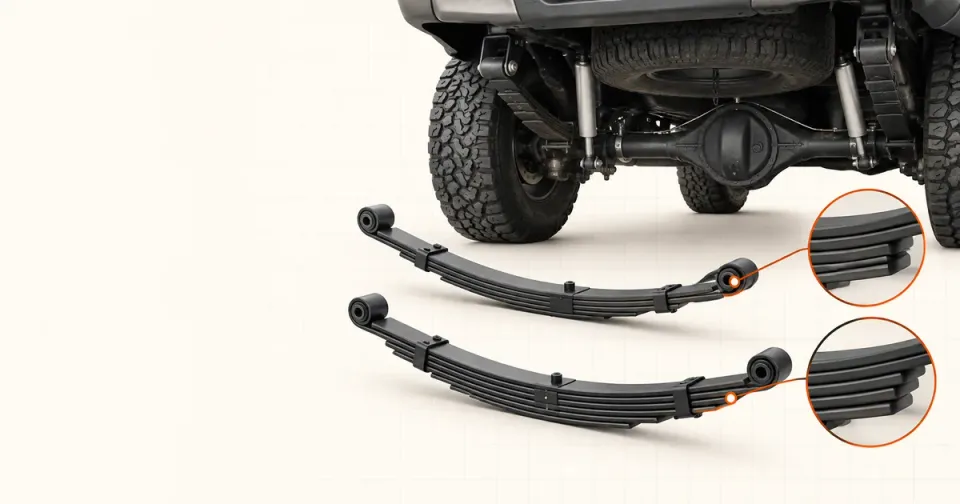
MATCH THE SPRING TO CONSTANT LOAD
Choose EL111R for OME's medium-load Tacoma application; choose EL112R only when the truck carries OME's stated constant 300 kg rear load. Neither label is a substitute for weighing the loaded truck and staying within Toyota's door-label limits.
Compatibility snapshot
ARB's current Old Man Emu product pages label EL111R a medium leaf spring and EL112R a 300 kg-load leaf spring. ARB also lists EL111R in a Tacoma BP-51 suspension kit, tying that spring category to a Tacoma application. Check ARB's EL111R page, EL112R page, and Tacoma kit listing.
The direct decision follows the manufacturer categories:
| Your normal rear setup | Starting point |
|---|---|
| No measured constant 300 kg rear load | EL111R medium load is the starting point. |
| A measured, continuously carried 300 kg rear load that matches OME's application | EL112R constant load is the supported starting point. |
| Weight changes by trip, or the real load is unknown | Unknown—measure first; do not buy by “heavy-duty” label. |
“Constant” means normal operating weight
Do not choose EL112R solely because you sometimes carry camping gear, people, or a trailer tongue load. The source calls it a constant 300 kg application. The relevant number is the equipment that stays on the truck during ordinary use—such as fixed drawers, a topper, mounted recovery gear or other permanent cargo—not an occasional weekend payload.
The cited OME documents do not establish an exact ride height, rake, or handling result for every Tacoma configuration. Tire size, shocks, front spring selection, alignment and other suspension parts still matter. Treat a manufacturer spring category as a component application, not a complete suspension design.
Verify vehicle limits separately
Toyota's owner guidance says cargo capacity depends on the vehicle's total load capacity and the weight of occupants, and directs the owner to the vehicle's loading information. See Toyota's cargo-capacity guidance. A stiffer spring can support ride height; it does not increase the truck's certified payload, rear-axle rating, tire rating or GVWR.
Before installation, weigh the truck as normally driven, compare it with the certification label, and have a qualified suspension shop check the full system. After any suspension work, have alignment and fastener work performed to the component manufacturers' instructions.
Bottom line
OME's documentation gives a clean split: EL111R for medium load; EL112R for a constant 300 kg rear load. If you cannot document the latter, start from EL111R rather than using a heavy-load spring as a styling or hypothetical-future-load choice. Keep the final decision inside Toyota's certified load limits. Use the broader constant-rear-weight suspension guide to match springs and dampers as a system.
Sources & notes
- ARB OME EL111R product page, accessed 2026-09-05. Manufacturer page identifying EL111R as a medium leaf spring.
- ARB OME EL112R product page, accessed 2026-09-05. Manufacturer page identifying EL112R as a 300 kg-load leaf spring.
- ARB OME BP-51 Tacoma kit, accessed 2026-09-05. Manufacturer Tacoma kit listing that includes EL111R; it does not establish compatibility for every Tacoma configuration or substitute for checking the selected system's current fitment notes.
- Toyota cargo-capacity guidance, accessed 2026-09-05. Toyota owner-manual guidance that vehicle load capacity depends on occupants and cargo; it does not authorize a suspension change to increase certified ratings.