
How Do You Maintain a Hard Tonneau Cover on a Ford Maverick?
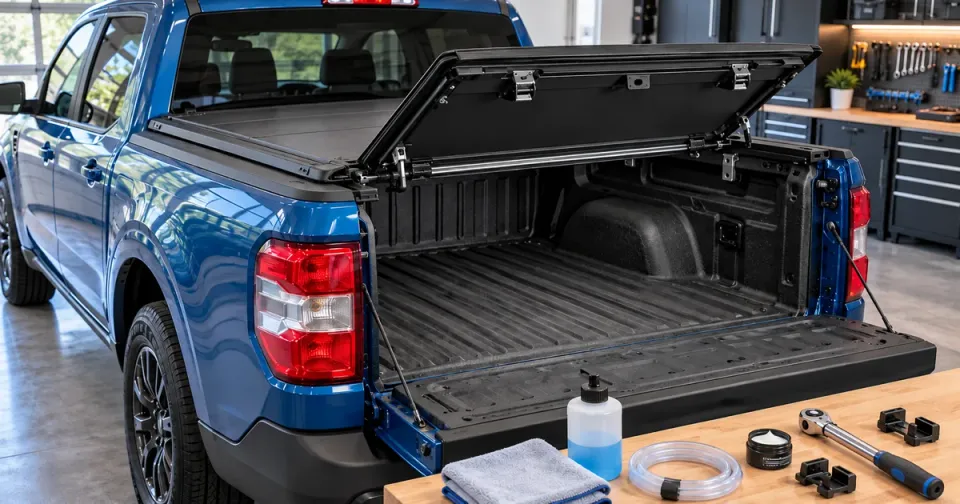
CLEAN GENTLY, KEEP DRAINS OPEN AND INSPECT EVERY ATTACHMENT AND LATCH
Wash a Maverick hard tonneau with mild soap and water, then check the drains, clamps and latches using the instructions for your exact cover. The care steps change by design. The reviewed Roll-N-Lock instructions prohibit spraying lubricant into the tracks. Match any replacement hardware to the cover model and revision.
Hard-fold, hard-roll and retractable covers do not share identical care. A treatment safe on one vinyl or aluminum finish may damage another, and lubricant placed in the wrong track can collect grit.
Wash loose grit away before wiping. Use mild automotive soap, a soft cloth and clean water unless the manufacturer authorizes a specific protectant. Do not use wax, abrasives or solvents on surfaces that prohibit them.
Operate the cover fully during inspection. Both sides should latch consistently; retractable slats should enter the canister without skewing; folding panels should sit flat and their driving restraint should work. Look below the rails for clamp movement or liner interference.
After adding or moving a bed rack, repeat the cover inspection because shared T-slots or adapter stacks can change rail alignment. A leak, rattle or suddenly stiff latch is a reason to stop and diagnose—not to add more clamp torque.
Can you replace just the latch, drain tube or rail?
Start with the cover maker's model and serial label. A truck-year match alone does not identify the right part for a cover. Record which panel, side or rail failed and ask for the exploded diagram for that cover revision.
A single tube or latch can be worth replacing when the surrounding mount and cover are sound. Get a complete quote for the part, delivery and labor before deciding. If the rail is distorted or a latch will not engage securely, stop using the cover until it is repaired or removed as the manufacturer directs. Compare an inspected repair with the cost and coverage of a new kit.
Follow Roll-N-Lock’s care instructions before treating a sticky track with a spray. The maker specifies cleaning and prohibits spraying lubricant into the tracks.
Bottom line
Routine cleaning is only half the job. A safe Maverick hard cover needs clear drainage, aligned rails, working latches and periodically verified hardware.
If water is the symptom, use the Maverick tonneau leak guide.
Compatibility snapshot
| Setup | Verdict | Required check and source |
|---|---|---|
| BAKFlip hard-fold | Clean panels and clear drains | Check clamps, panel latches and the open-position restraint for your cover. BAKFlip instructions |
| Roll-N-Lock retractable, covered family | Clean the track and housing drains | Follow the maker's care sheet, which prohibits spraying lubricant into its tracks. Roll-N-Lock care sheet |
| Retrax retractable, covered family | Use the Retrax-specific track care | Follow the care sheet for your cover and clear drains as instructed. Retrax care sheet |
| Loose latch, split drain tube or damaged rail | Choose the service part by cover model and revision | Give the cover maker the serial number, position and rail side. BAKFlip parts diagram example |
Sources & notes
Last verified 8 November 2026.
- BAKFlip installation sheet. Cross-check Retrax care and Roll-N-Lock care. Follow family-specific products.
- Roll-N-Lock 9-6007 care sheet. Applies to the documented family. Its care instructions distinguish cleaning from lubrication.
- BAKFlip exploded hardware sheet. A matching truck year does not establish the right replacement. Verify the exact part with the cover maker.
- BAKFlip care and maintenance instructions, accessed 2026-10-27. Cleaning, hardware, latch and drain care.
- BAKFlip current installation instructions, accessed 2026-10-27. Current component and inspection context.
- Ford hard rolling Maverick bed cover, accessed 2026-10-27. Exact application reference.