
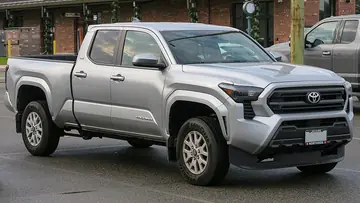
Buying a Used Tacoma: Reliability Claims and Checks That Matter
JUDGE THE CANDIDATE BY ITS EVIDENCE
A Tacoma’s reliability reputation cannot tell you whether a particular used truck is a good purchase. Check its identity, frame and repair condition, maintenance, modifications and campaign history against your planned use. A clean VIN recall result is useful but limited: it does not inspect corrosion, document every completed repair, or prove eligibility for an older frame-support program.
Fit Assistant · For your setup
Apply this to your used-truck choice
Tell us a little about your situation. Fit Assistant will help you apply this guide.
Turn “are Tacomas reliable?” into a purchase decision
The question becomes more useful when you attach it to an actual candidate: year, engine, transmission, drivetrain, mileage, location history and asking price. Then separate the evidence you have from what the advertisement merely suggests.
| Seller claim | Useful evidence | What remains unresolved |
|---|---|---|
| “Toyota reliability” | Records and inspection of this truck | Its actual condition and future repair risk |
| “No recalls” | Current VIN result and repair history | Non-safety programs and present mechanical condition |
| “Frame treated” | Dated work order and detailed inspection | Condition beneath a coating and any current coverage |
| “Professionally built” | Parts list, invoices and fitment documentation | Present installation quality and wear |
| “Low miles” | Consistent history and odometer records | Storage, corrosion, damage and neglected maintenance |
This does not dismiss a well-kept truck. It gives a seller a clear way to substantiate the price premium.
Ask for a frame inspection, not a reassuring photograph
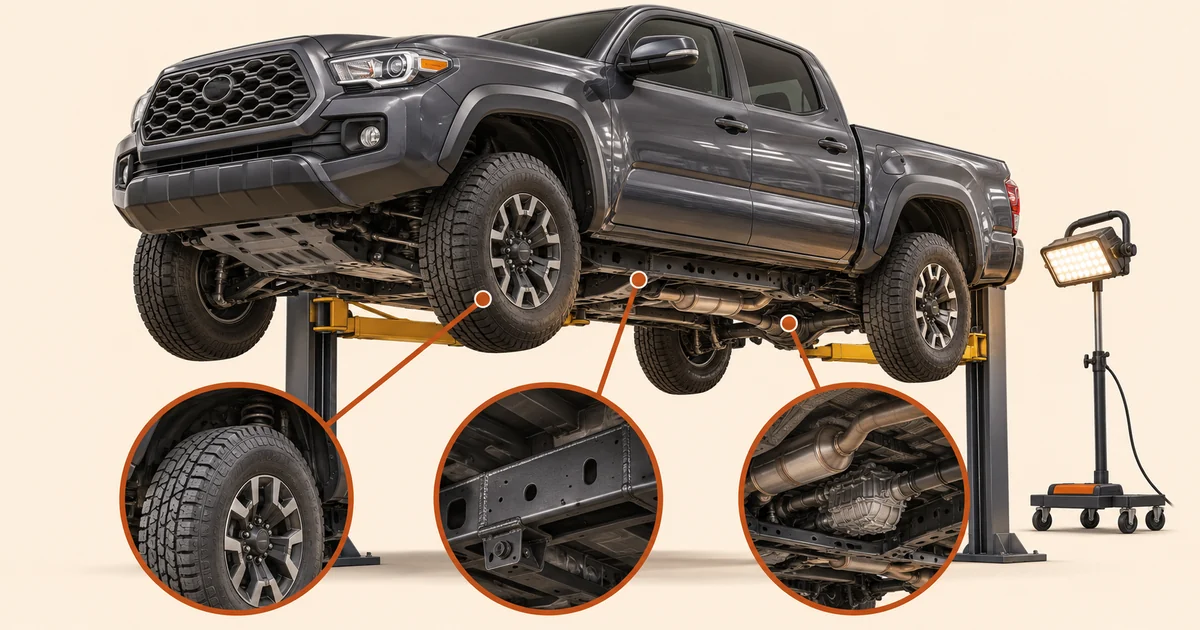
Frame condition deserves explicit attention on an older Tacoma, particularly where road salt or other corrosive exposure is part of its history. Ask a qualified inspector to assess structural condition, suspicious repairs and areas hidden by accessories or coatings. Do not try to judge structural soundness from a freshly painted underside.
There is a reason to ask about past program work. A Toyota customer-support letter hosted by NHTSA addresses frame-corrosion perforation on certain 2011–2017 Tacomas. That is a specific program document, not a promise that every truck from those years currently qualifies for a free frame.
Ask Toyota or a dealer to check the actual VIN’s records, work completed and any remaining eligibility. An expired or inapplicable program cannot be treated as a repair budget. If the frame’s condition is unresolved, resolve it before assigning value to expensive accessories.
Know what the recall search leaves out
Use NHTSA’s VIN lookup and Toyota’s recall/service-campaign lookup for the identified truck. Save the result with the date and ask for repair orders where relevant.
NHTSA notes that the VIN search omits completed safety recalls, non-safety campaigns and generally recalls older than 15 years, among other limits. Those limits are especially relevant when comparing older pickups.
A clean result therefore does not establish that an old frame program was completed or that the chassis is sound. Keep the question precise: what work applied to this VIN, what was done, and what needs attention now?
For basic configuration identification, the Tacoma VIN guide can help you organize the truck’s details. Decoding identity is a different task from checking condition.
Build an inspection brief around how you will use it
Give the independent inspector your intended use: commuting, a trailer, remote camping, carrying a camper or a substantial tire/suspension build. Ask for observations and repair estimates, with further diagnosis listed separately.
Have the inspection address the powertrain, cooling, brakes, steering, suspension, tires, leaks and fitted electronic features. If you need 4WD, ask that the relevant system’s operation be assessed. A short seller-accompanied drive is not the same as a documented condition report.
The FTC distinguishes a history report from an independent inspection. Both can help, but they answer different questions. A report can identify recorded events; the inspector examines the current truck and explains what the findings mean for your decision.
Do not turn a complaint count, recall list or a single owner’s high-mileage story into a failure rate. Without comparable exposure and a defined sample, those observations cannot tell you how likely this candidate is to fail.
Is a stock truck better than a modified one?
Neither label settles it. A stock high-mileage truck with clear maintenance and inspection findings may be easier to price than a lower-mileage truck with undocumented changes. A carefully documented build may also be appropriate for your use.
For modified examples, collect:
- Actual wheel/tire specifications and any rubbing or bodywork history.
- Suspension, steering and alignment records.
- Added electrical equipment and installation details.
- Armor, camper or rack weight and the remaining load budget.
- Drivetrain or tuning changes and who performed them.
Price the work required to keep, correct or remove those changes. Do not value every accessory at its original retail price, or assume a lift increases payload.
Compare candidates with an evidence worksheet
Use the same categories for each truck rather than awarding a vague “reliable year” bonus.
| Decision area | Candidate A | Candidate B |
|---|---|---|
| Condition | Inspection and unresolved issues | Same type of report |
| Records | Maintenance and repair gaps | Known work and gaps |
| Configuration | Meets your actual passenger/load/use needs? | Same requirement |
| Near-term cost | Purchase plus quoted immediate work | Same comparison basis |
| Remaining uncertainty | Explicit question and next check | Explicit question and next check |
Worked example: a 2016 truck from a salted-road region has a clean recall result and new undercoating. Those details do not settle the frame. Obtain the frame assessment and past Toyota work records before treating the cosmetic appearance or a program letter as reassurance.
Another example: two candidates both meet your use needs, but one has a documented repair list and the other has an unexplained noise. Price the unresolved diagnosis rather than assigning the second truck the average cost of an online anecdote.
Compatibility snapshot
| Claim or candidate | Scope | Result | Required check |
|---|---|---|---|
| 2011–2017 frame-support letter | Certain covered applications | Reason to investigate history | Current VIN record and actual condition · Toyota customer-support letter hosted by NHTSA |
| No unrepaired recalls shown | Limited VIN lookup | Useful, incomplete evidence | Completed work, campaigns and inspection · NHTSA’s VIN lookup · Toyota’s recall/service-campaign lookup · FTC distinguishes a history report from an independent inspection |
| Fresh undercoating | Appearance or treatment claim | Does not establish sound structure | Qualified inspection and records · Toyota customer-support letter hosted by NHTSA · FTC distinguishes a history report from an independent inspection |
| Modified used Tacoma | Individual final build | Unknown until assessed | Parts, installation and load/use suitability · FTC distinguishes a history report from an independent inspection |
Before you buy
You have finished the research when the exact candidate’s condition, use suitability and near-term costs are clear enough to accept or reject the asking price. The goal is an informed decision about this truck, not a promise that a certain model year never needs repairs.
Sources & notes
Reviewed 7 November 2026. Toyota’s scoped frame-program letter, Toyota lookup, NHTSA lookup and limits, and FTC inspection guidance. No original reliability dataset, inspection or current individual warranty determination is claimed. See our methodology.