
Which Truck-Bed Camper Makes Sense for Your Tacoma?
CHOOSE THE CAMPING ROUTINE BEFORE THE CAMPER BRAND
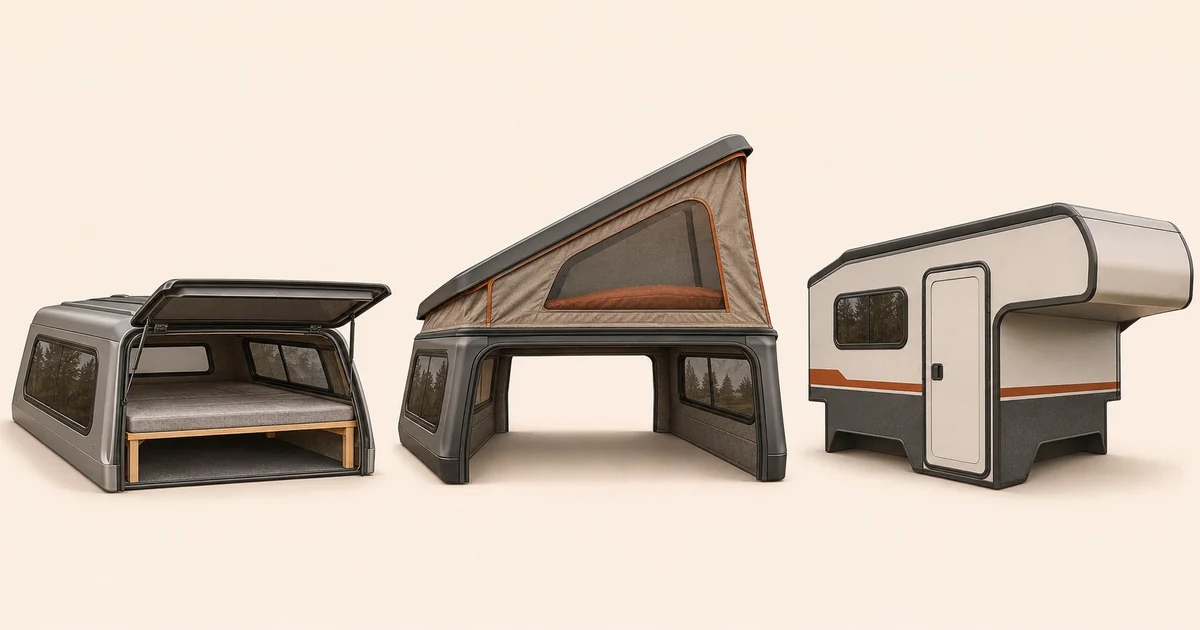
For simple weekend sleeping, compare a cargo shell with a removable platform first. For an integrated elevated bed while retaining space below, compare pop-up or wedge toppers. For a more complete living space, compare slide-in campers. The right choice depends on how you camp, daily bed use and the finished loaded weight—not whether a listing simply says “Tacoma.”
Fit Assistant · For your setup
Choose a camper for the way you travel
Tell us a little about your situation. Fit Assistant will help you apply this guide.
Which camping problem are you trying to solve?
| Your routine | Start by comparing | Main compromise |
|---|---|---|
| Occasional overnight trips with a simple bed | Cargo shell and removable sleeping platform | Gear and sleeping share the truck bed |
| Frequent weekends with an integrated sleeping space | Wedge or pop-up topper | Opening routine, fabric care and the actual space below the bed |
| Longer stays where indoor living features matter | A documented slide-in camper and chosen interior | More equipment, occupied bed volume and a larger loaded-weight commitment |
| Work truck during the week, camping truck on weekends | A reversible platform or a camper with a practical removal plan | Where the equipment goes when you need the empty bed |
Two people taking short trips with minimal equipment have a different decision from someone spending weeks inside a built-out camper. Start with what happens on a rainy evening, what stays packed and what you need the truck to do on Monday.
This guide chooses a sleeping/living setup. If the main job is enclosing tools or tall cargo, start with the Tacoma camper-shell and topper guide instead.
When is a shell and sleeping platform enough?
A shell plus a removable bed platform is the simplest category to compare when you want covered sleeping without committing to a built-in living unit. Check your usable sleeping length, mattress height, entry and ventilation with the actual enclosure. A platform that stores gear below can also move the sleeping surface closer to the roof.
Think through the unpacking routine. If both people must move the cooler and boxes outside before going to bed, the setup may be less convenient than it looks. Conversely, a removable platform can be useful when large cargo matters more than a permanently arranged interior.
Do not assume every cargo shell is intended to carry a tent or rack above it. Sleeping inside and loading the roof are separate product questions.
What do wedge and pop-up toppers change?
These combine a truck-bed enclosure with a raised sleeping area or pop-up roof. Their main appeal is an integrated camping routine rather than a separate tent mounted above an unrelated shell. Compare access between the bed and sleeping area, how the sleeping platform moves, weather entry, ventilation and the space left for cargo.
GFC's current V2 Pro support page provides one concrete wedge/platform example. It lists midsize camper weights of 250–270 lb depending on bed length and describes the sleeping platform and removable side panels. That is a product-family reference, not the installed weight of your selected Tacoma build. Review GFC's current V2 Pro details.
Four Wheel Campers offers a different pop-up-topper route with Project M. Its February 2026 specification sheet lists 352 lb for a midsize five-foot version and 377 lb for a midsize six-foot version. The same sheet lists options separately, including a mattress, power equipment, jacks and racks. Compare the configured quote rather than treating a base weight as travel-ready weight. Read the dated Project M specification sheet.
Those examples illustrate different builds, not a performance ranking. Visit a unit if possible and try the actual entry and bed-opening routine before choosing.
When should you compare a slide-in camper?
A slide-in places a camper body into the bed and can provide a more developed interior. Compare the exact sleeping arrangement, storage, sitting space and any selected cooking, power or water equipment. Not every slide-in includes the same facilities, and some also use pop-up roofs.
Four Wheel Campers' Tacoma selection page distinguishes its Swift for five-foot beds and Fleet for six-foot beds, alongside Project M and other layouts. A bed-length match is the start of selection; it does not settle the finished weight or installation. See the maker's Tacoma model choices.
Kimbo's Tacoma page supplies a hard-sided example: it lists the Kimbo 6 at 830 lb dry and calls for closer review of first- and fourth-generation applications. Use the exact truck and configured camper for the discussion. Do not apply the page's generic Tacoma payload range to your truck. Review Kimbo's Tacoma fit guide.
A more complete interior can make longer stays easier, but its equipment also changes what you carry every day. The question is whether those features earn their weight, space and upkeep for your trips.
Why does loaded weight matter more than the headline number?
The camper's published base or dry weight is only one item. Account for its chosen options, mounting hardware and everything carried for travel. Include water, batteries, food, tools, racks and camping gear, then occupants and other truck accessories without double-counting items already included in a measured weight.
Use the truck's own labels and current manual for its limits, including gross vehicle and axle ratings. A manufacturer's generic truck range cannot replace those. If the finished combination is close to a limit, resolve it with the camper maker and a qualified installer using the actual configuration and weights. Heavier springs or airbags do not establish a higher rated payload.
The Tacoma payload-after-modifications guide helps organize that separate check. This page is a category buying guide, not approval of a loaded camper/truck combination.
Will your Tacoma still do its everyday job?
Check the camper closed as well as open. Consider your garage and parking height, rear visibility, access to tools and whether the tailgate works as you expect. Ask which bed accessories remain usable and which must come off. A shell, tonneau, rack or storage system does not automatically coexist with a camper occupying the same area.
If removal matters, ask how the exact product is removed, what lifting or support equipment is approved, where it can be stored and which connections must be disconnected. “Removable” does not mean a one-person weekly routine. Do not assume a bed-rail topper uses the same unloading system as a slide-in body.
What if you are buying a used camper?
Ask for the original truck application and unit/build records before comparing the asking price with a new product. GFC explicitly makes V2/V2 Pro fitment vehicle- and generation-specific; its used-unit guidance recommends original order and unit-number information. A similar-looking bed is not enough. Check GFC's used-camper application guidance.
Also confirm that the required mounts, seals, wiring parts and installation instructions are included and supported for the intended truck. An attractive used price can change once missing or incompatible equipment is accounted for.
Compatibility snapshot
| Proposed route | What the reviewed source supports | What still needs confirmation |
|---|---|---|
| GFC V2/V2 Pro | Vehicle/generation/bed-specific camper selection | Original build application and supported installation |
| Project M | Named midsize five-/six-foot base specifications | Exact Tacoma application, options and installed/travel weight |
| Swift or Fleet | Maker distinguishes five-/six-foot-bed Tacoma routes | Configured body, mounting, loaded weight and truck limits |
| Kimbo 6 | A named Tacoma-oriented hard-sided slide-in example | Exact generation, bed behavior, complete weight and installation |
Before you buy
- Choose the sleeping and daily-use routine you need, not only a brand.
- Get the maker's exact year, generation and bed application in writing.
- Compare a complete configured quote, including mounts and necessary equipment.
- Check loaded vehicle/axle limits using the actual truck and intended travel setup.
- Confirm closed height, entry, tailgate operation and remaining accessory use.
- Plan approved removal and storage if you need the bed back between trips.
Browse Tacoma Guides and cargo and overland for related equipment decisions.
Bottom line
A simple sleeping platform, a pop-up topper and a slide-in living unit solve different problems. Choose the routine you want to repeat, then check the exact product and loaded truck. A more elaborate camper is useful only when its extra space and features fit both your trips and everyday ownership.
Sources & notes
- GFC V2 Pro support, checked 2026-11-05. Midsize family example, bed-length-dependent weight and camping features; not a selected Tacoma's installed weight.
- GFC used-camper fitment, checked 2026-11-05. Exact generation/application and original unit-record requirements.
- Project M February 2026 specifications, reviewed 2026-11-05. Midsize base weights and separately listed options; obtain current configured specifications and pricing.
- Four Wheel Campers Tacoma selection, checked 2026-11-05. Model/bed routes and its explicit requirement to verify configured weight against the actual truck.
- Kimbo Tacoma fit guide, checked 2026-11-05. Named hard-sided example and dry weight; broad compatibility/payload marketing is not a verdict for an individual truck.
- Original generic camping-structure illustration. No exact product or installed combination is depicted. This guide reports documentation, not a hands-on camping, load or durability test.