
How to Carry a 14–16 ft Canoe on a Ford Maverick
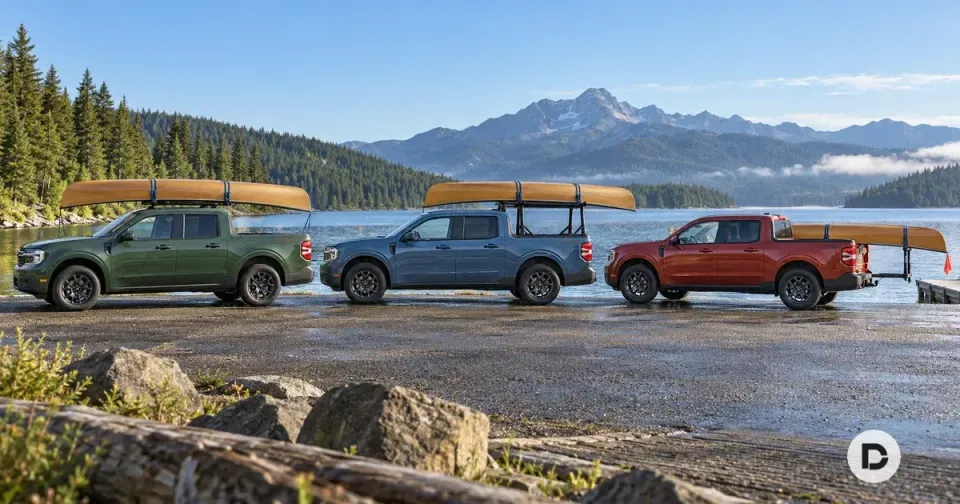
CAB-HEIGHT BED RACKS GIVE THE BEST SUPPORT; ROOF BARS ARE THE SIMPLEST LIGHT-DUTY ROUTE
For regular canoe transport, a cab-height bed rack plus a forward support point gives the best bar spread and keeps the boat above the truck. Roof bars can work for a light canoe within the complete roof-system rating. A hitch extender is best when low loading matters, but rear overhang, visibility and legal marking become central.
The Maverick's 54.4-inch bed is far shorter than a 14–16-foot canoe, so laying the boat in the bed without a purpose-built support creates extreme overhang. The practical systems are above-cab support or a rated hitch-mounted extension.
| System | Best for | Main drawback |
|---|---|---|
| Roof crossbars | Occasional light canoe, simplest bed access | Shorter spread and high lift |
| Cab-height bed rack | Frequent use, long boat, strong spacing | Cost, wind and rack weight |
| Hitch extender | Low loading and open roof | Rear overhang and parking length |
Ford lists a Maverick crossbar kit and a Yakima hitch-mounted LongArm extender in its current accessory catalog. Those listings establish available routes, not a complete canoe system. The canoe, gunwale blocks or saddles, crossbars, towers and vehicle mounting points must all remain within their own ratings.
Compatibility snapshot
| Check | Required evidence |
|---|---|
| Canoe | Weight, length and manufacturer tie-down guidance |
| Supports | Rated dynamic capacity and permitted bar spread |
| Vehicle mount | Exact Maverick roof, bed-rail or hitch application |
| Restraint | Two hull straps plus bow/stern lines where instructed |
| Overhang | State/provincial flag, light and length rules |
| Operation | Tailgate, rear camera, lamps and license plate remain usable/visible |
Never hook a bow line to plastic trim. Use documented structural anchors and protect painted contact points. Recheck strap tension after the first few miles and after weather changes.
Bottom line
For a canoe carried often, buy a cab-height rack system designed around the boat. For occasional transport, a properly rated roof system is simpler. Use a hitch extender when loading height is decisive and you can manage the added rear length legally and safely.
For rack geometry, see low vs mid vs cab-height Maverick bed racks.
Sources & notes
- 2026 Ford Maverick specifications, accessed 2026-10-27. Bed dimensions.
- Ford 2026 Maverick cargo accessories, accessed 2026-10-27. Maverick crossbar kit and Yakima LongArm listing.
- Carrier, canoe and local overhang instructions control the final installation and restraint plan.