
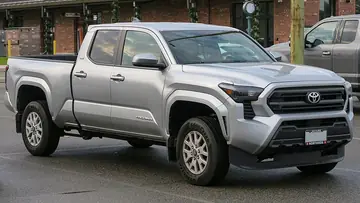
Second-Gen Tacoma Fender Flares: Coverage or a Bodywork Change?
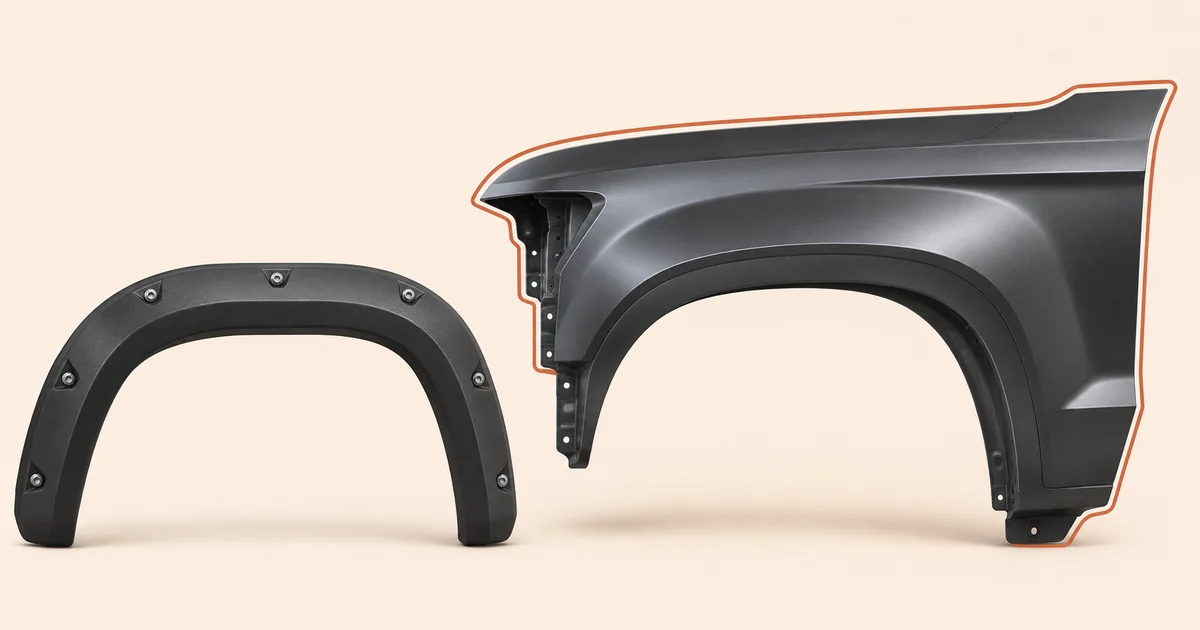
DECIDE BETWEEN COVERAGE AND BODYWORK
Choose add-on fender flares when the task is outward tire coverage; compare replacement fiberglass fenders when you are considering a larger bodywork change. They are different purchases. For second-gen Tacomas, year and bed details matter: the reviewed Bushwacker 31920-02 is a 2005–2011 long-bed application, while ADV’s reviewed replacement front fenders cover 2005–2015 with additional configuration notes.
Fit Assistant · For your setup
Apply this to your bodywork choice
Tell us a little about your situation. Fit Assistant will help you apply this guide.
Coverage and clearance are different problems
A tire protruding beyond the body and a tire rubbing during steering are not the same issue. Before buying, describe which one you want to solve.
| Your goal | Useful starting route | What the product name cannot prove |
|---|---|---|
| Cover a wider wheel/tire position | Correct add-on flare application | That the tire will clear inside the wheel opening |
| Change the body’s width and opening shape | Documented replacement fender/bodywork package | A universal no-rub result for the whole build |
| Match a planned wider suspension setup | Compare the suspension maker’s width information with the body package | That a cosmetic flare dimension describes suspension clearance |
| Repair existing body damage | Assess repair scope first | That flares hide or repair a structural/body problem |
For the separate wheel-position decision, see Tacoma wheel offset. A different wheel position can change both inner and outer clearance, regardless of which flare looks best.
What does the Bushwacker example cover?
RealTruck’s Bushwacker 31920-02 page lists a 2005–2011 Tacoma with the listed 6-foot-2 bed. It describes an ABS add-on flare with a paintable black finish and faux pocket fasteners. Its displayed price was $359.99 at review.
The selected SKU’s product notes flag drilling required, even though the family-level copy describes no-drill installation on most applications. The specific note is the reason to obtain the actual instructions before committing. Do not turn “bolt-on style” or decorative fasteners into a no-drill promise.
That example is not a short-bed or 2012–2015 approval. Filter the actual year and bed before comparing a different set’s price or installation.
What does a replacement fiberglass fender change?
ADV’s 2005–2015 front-fender page describes replacement fiberglass panels sold as a driver/passenger pair in semi-gloss white. It offers AFC 94 with a 4-inch flare/3-inch rise and AFC 130 with a 6.5-inch flare/4-inch rise.
ADV measures flare width from the factory panel with the original flare removed. That baseline matters. Do not read “4-inch flare” as four additional inches beyond the outer edge of every factory flare.
The page also distinguishes bumper-cap details: the named caps are for the 2005–2011 arrangement, with modification noted for 2012–2015. A broad 2005–2015 fender title does not settle the entire finished front-end package.
These facts identify a different bodywork route. They do not establish clearance for your actual tire, wheel offset, suspension travel, liner and bumper combination.
Compare the completed job
| Cost/work item | Add-on flare route | Replacement fiberglass route |
|---|---|---|
| Product | Correct year/bed set and contents | Selected front pair and any related pieces |
| Surface finish | Keep supplied finish or quote paint | Decide whether supplied finish meets your goal; quote preparation/paint |
| Installation | Application-specific attachment and drilling notes | Panel fit, related pieces and body-shop work |
| Related components | Existing flare/liner/trim conditions | Bumper caps, liners and other affected interfaces |
| Final review | Coverage and attachment | Panel fit plus actual build clearance |
Do not compare a flare set’s retail price with a fiberglass pair’s price and call that the finished difference. Ask the installer to state what work and parts each route includes. Also distinguish a front pair from a four-corner flare set.
Two second-gen examples
2010 long-bed truck, wheels protrude, wants a modest change: start with an add-on flare documented for that exact truck. The reviewed Bushwacker is a candidate within its scope, but the drilling note still belongs in the decision. Replacement fiberglass may be more bodywork than the coverage goal requires.
2014 truck, wider suspension planned: ask for the actual added width per side and compare it with the replacement panel’s measurement baseline. Discuss the bumper-cap arrangement and complete bodywork quote. Do not treat a fender’s advertised rise as approval for a particular tire at full travel.
If the problem is rubbing rather than coverage, identify where contact occurs before selecting either route. Added outer coverage alone does not explain or cure the contact.
Compatibility snapshot
| Product/application | Vehicle fitment | Result | Required check |
|---|---|---|---|
| Bushwacker 31920-02 | Listed 2005–2011, 6'2 bed | Documented candidate | Exact truck and SKU drilling instructions · RealTruck’s Bushwacker 31920-02 page |
| Same SKU on short bed or 2012–2015 | Outside reviewed application | Do not assume fit | Correct documented set · RealTruck’s Bushwacker 31920-02 page |
| ADV AFC 94/130 front pair | Named 2005–2015 application | Documented bodywork route | Flare baseline, bumper/liner interfaces and finish · ADV’s 2005–2015 front-fender page |
| Any flare/fender with a modified wheel/suspension setup | Combined build | Unknown until checked | Actual contact, travel and completed body package · RealTruck’s Bushwacker 31920-02 page · ADV’s 2005–2015 front-fender page |
What should you decide now?
Whether you need coverage or a larger bodywork project, and which complete quote matches that job. Fit Assistant can help apply those differences to the truck and planned wheel changes you already know.
Browse Tacoma Guides and tires and wheels.
Sources & notes
Reviewed 7 November 2026. Named product scope comes from the linked makers. A specific drilling note is retained rather than overridden by generic family copy. No road-law compliance, guaranteed coverage measurement or universal no-rub result is claimed. Illustrations show separate generic components, not approved bodywork.